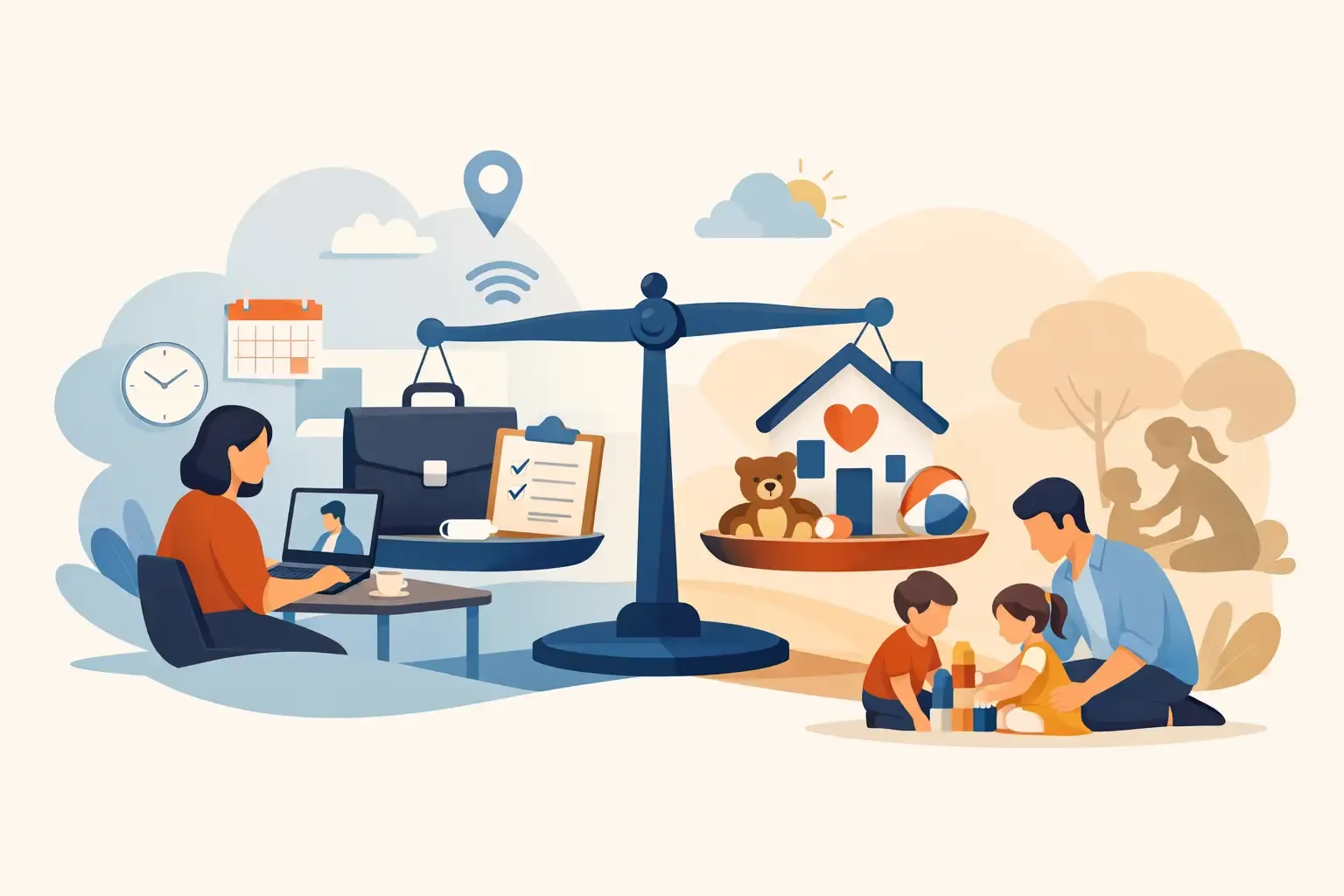
The call from nursery comes at 11.15am. Your child is unwell, your manager needs an answer, and your carefully planned working day suddenly becomes another impossible juggle. For many women, flexible careers are not about doing less or avoiding ambition. They are about finding a way to earn, grow and feel like yourself without missing every school assembly, appointment and ordinary Tuesday afternoon that matters.
A career should support your life, not demand that your family squeezes itself around it. Yet so many roles still come with fixed hours, long commutes and the quiet expectation that work must always come first. If that no longer fits your reality, it does not mean you have run out of options. It may simply mean it is time to look at work differently.
What flexible careers really mean
Flexibility is often used as a buzzword, but it can mean very different things from one job or business to another. Working from home is helpful, of course, but it is not the whole picture. A home-based role with back-to-back meetings from 9am until 5pm can still leave you feeling just as restricted as an office job.
True flexibility gives you a greater say over when, where and how you work. It might mean fitting focused work around the school run, choosing the hours you put in each week, working from your kitchen table while the baby naps, or being able to take your work with you when family life changes.
That does not mean no structure and no effort. Most flexible careers still require consistency, learning and a willingness to protect time for yourself. The difference is that you are building around your real life rather than constantly apologising for it.
For one woman, flexibility may mean a part-time remote role with dependable hours. For another, it may be self-employment or a home-based business that can begin alongside a current job. The best option depends on what you need most right now: a reliable wage, more control, room to grow, or a combination of all three.
Why the traditional career path stops working for many mums
Returning to work after having children can bring a complicated mix of emotions. You may miss adult conversation, your professional identity and the feeling of contributing financially. At the same time, the cost of childcare, the pressure of commuting and the guilt of rushing through every morning can make the old routine feel completely unsustainable.
It is not a lack of motivation. In fact, many mums become more focused after children because their time is precious. They want work that feels worthwhile, pays fairly and gives them a future, but they also want to be present for the people they are working so hard to support.
A rigid role can make every unexpected moment feel like a problem to solve. A poorly child, an inset day, a partner working late or a school event can leave you feeling torn in two. Flexible work cannot remove the unpredictability of family life, but it can give you more space to respond to it without feeling that you are failing at work or at home.
There is also the personal side. Motherhood can be all-consuming, particularly in the early years. Finding something that is yours - a goal, an income stream, a new skill or a supportive community - can rebuild confidence in a way that is hard to explain until you experience it.
The freedom to build gradually
One of the biggest myths about changing direction is that you need to make a dramatic leap. Hand in your notice, risk everything and hope it works out. For most families, that is not realistic, and it does not have to be the plan.
A sustainable flexible career can often start small. You might give it a few hours a week around your existing work and family commitments. That gives you time to learn, find your rhythm and see whether the model genuinely suits you before making any bigger decisions.
Starting gradually matters because it takes pressure off. You are not expecting a new income source to carry the whole household immediately. You are creating options, building belief in yourself and proving that you can make progress in the pockets of time you already have.
Some women will want a role that remains part-time and fits neatly around family life. Others will want to build towards replacing an old salary or creating more financial security over time. Neither goal is more valid. Flexible careers should give you choice, not another version of someone else’s definition of success.
What to look for before you commit
Not every opportunity that promises flexibility delivers it. Before committing your time, energy or money, give yourself permission to ask sensible questions. You deserve clear information, not vague promises or pressure to decide quickly.
Look closely at how the work actually happens. Can it be done in manageable blocks of time, or does it rely on you being available at fixed times every day? Is there training for someone starting from scratch? Are you supported when you have questions, or are you expected to work it all out alone?
It is also worth thinking about whether the work feels like you. The most sustainable option is rarely the one that looks exciting for a week. It is the one you can see yourself doing consistently, even on the weeks when the washing is piled up, the children need you and your confidence wobbles.
Be honest about the trade-offs too. Working from home can blur the boundaries between work and family if you do not create a routine. Building something for yourself may mean using an evening or a quiet weekend hour at first. The aim is not to be available all the time. It is to choose your working time with intention, then be fully present when you are off.
Confidence often comes after the first step
Many women delay exploring new career options because they do not feel ready. Perhaps you have been out of paid work for a while. Perhaps your previous role feels far removed from online business, social media or working independently. Perhaps you are worried that everyone else knows more than you do.
The truth is, you do not need to have every skill before you begin. You need curiosity, a willingness to learn and the courage to let yourself be a beginner. Skills can be taught. Confidence is usually built through action.
Your experience already counts for more than you may realise. Managing a household, supporting children, coordinating schedules and making decisions under pressure all develop resilience, communication and problem-solving. Those qualities matter in any career, especially one where you are creating something on your own terms.
A good mentor or support network can make a real difference here. Not because they can do the work for you, but because they can show you what is possible, answer the questions that feel too small to ask and remind you that progress is rarely as polished as it looks online.
Making flexibility work in real life
The women who make flexible work sustainable are not necessarily the ones with the most free time. They are often the ones who stop waiting for perfect conditions. A protected hour after bedtime, two mornings a week during childcare, or a focused block while a partner takes over can be enough to begin.
Start by deciding what you need work to give you. More money for breathing room? A path back to confidence? The ability to be home for the school run? A longer-term plan that is not tied to one employer? Once you know your reason, it becomes easier to judge opportunities by whether they support it.
Then keep your expectations kind and realistic. Family life will interrupt your plans. Some weeks will be more productive than others. That is not evidence that you cannot do it. It is simply the reality of building a career alongside a full life.
The right flexible career will not ask you to become a different person or sacrifice the moments you value most. It should help you create more choice, more confidence and more security, one practical step at a time. You do not need permission to want a life that has room for your family and room for you.