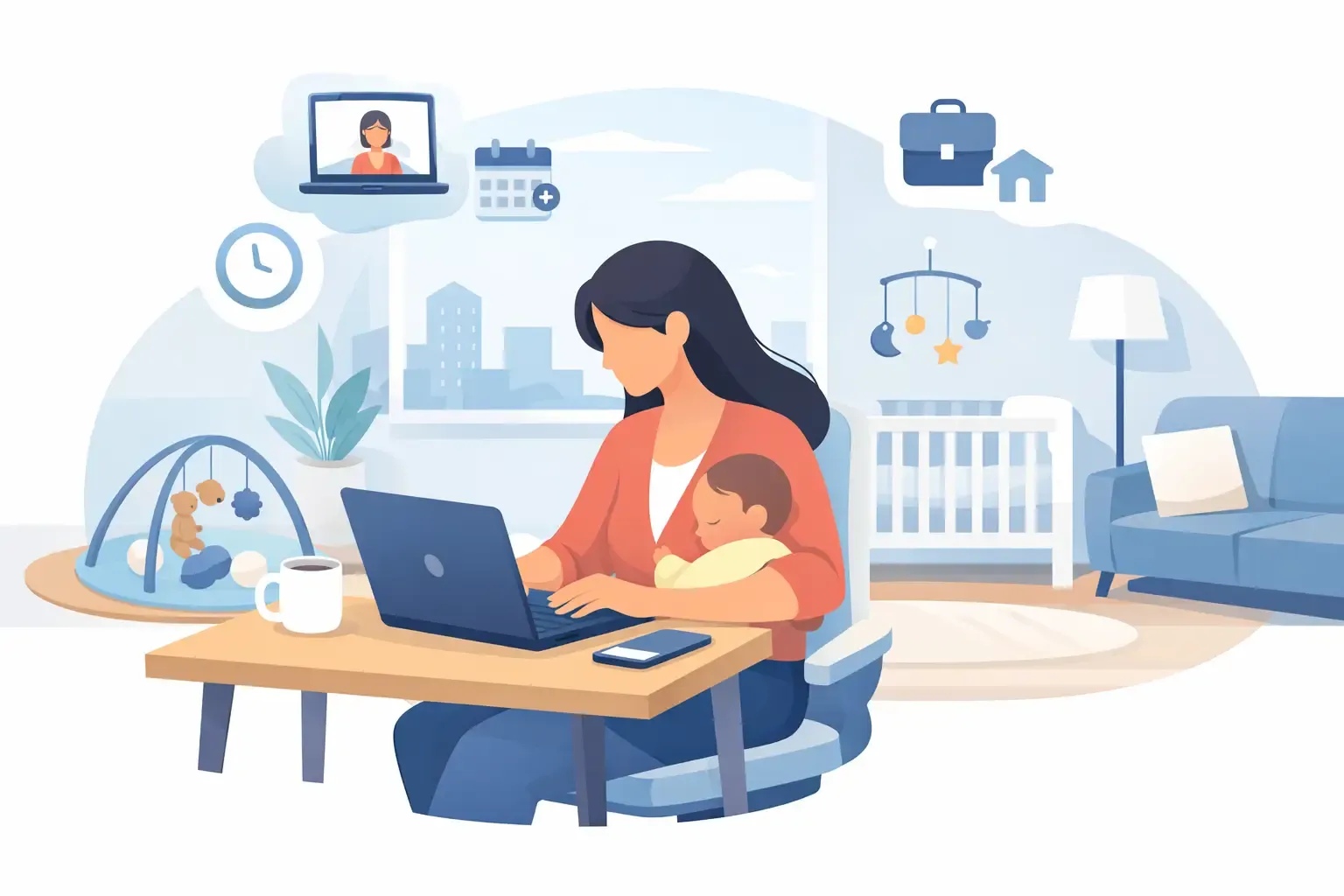
The first time you look at nursery fees, a return-to-work date and the reality of a five-day commute in the same week, something can shift. You may love your career, or you may simply need the income. But you also know that being away from your baby all day, then racing through dinner, bedtime and the never-ending washing is not the life you pictured. Learning how to create flexible work after maternity is not about lowering your ambition. It is about creating an income that makes room for your family and for you.
For many mums, the goal is not to work less forever. It is to work differently. To be there for the school run, take a poorly child day without feeling guilty, and build financial security without handing every spare hour to someone else’s timetable.
Start with the life you want work to support
Before searching job boards or saying yes to the first role that offers one day at home, get clear on what flexibility actually means in your household. It looks different for every family.
Perhaps you want to work around nap times while your child is small. Perhaps you need to finish by 3pm for pick-up, or you want the freedom to work from your kitchen table rather than travel into an office. You may be hoping to return to earning gradually, alongside maternity leave or another job, instead of making one huge leap.
Write down the non-negotiables. Think about the hours you have available, what childcare you genuinely have in place, the income you need, and how much headspace you can give something new. This is not about planning every minute perfectly. Life with children is rarely that tidy. It is about choosing a work model that can bend when real life does.
A role that says ‘flexible’ but still expects you to be online from 9am to 5pm may not give you the freedom you need. Equally, complete freedom without any structure can feel overwhelming when you are already tired. The best option is usually one with clear expectations, room to grow and a pace you can sustain.
Look beyond the traditional return-to-work route
A part-time role, compressed hours or hybrid working can be a brilliant answer for some women. If you enjoy your profession, have a supportive employer and can arrange childcare that works, negotiating a different return can protect the career you have already built.
But it is also okay if the old setup no longer fits. Motherhood can change what you want from your time, your energy and your earning potential. Wanting more choice does not make you ungrateful for your job. It means you are paying attention to the season you are in.
Flexible work after maternity can take several forms. Freelance or remote employment may suit you if you have a service or specialist skill to offer. A small business can give you more control, though it often takes time to establish. A home-based business model can also be a practical route for women who want support, a clear system and the chance to build around family life.
There is no one perfect route. The question is not, ‘What is the easiest way to make money from home?’ It is, ‘What can I build steadily without losing the very family time I am trying to protect?’
Choose a model that works in the cracks of real life
When you are exploring how to create flexible work after maternity, be honest about your current capacity. A newborn who wakes through the night requires a different plan from a child who is happily settled at school. Starting small is not playing small. It is often the smartest way to build confidence and momentum.
Look for work that can be done in focused pockets of time rather than only in long, uninterrupted blocks. That might mean replying to enquiries after bedtime, creating content during a quiet hour, speaking to people while your little one is at nursery, or setting aside two evenings each week for business-building.
The work still needs consistency. Flexibility is not the same as doing nothing until you feel inspired. Yet consistency can be gentle. A few protected hours each week, repeated over time, can create far more than an exhausting burst of effort followed by burnout.
Be wary of any opportunity that promises instant income with no learning, no effort and no honest conversation about the work involved. Sustainable flexibility is built on skills, trust and showing up. It should feel empowering, not pressurised.
Give yourself permission to be a beginner again
Returning after maternity can make even capable women question themselves. You may worry that you have lost your confidence, fallen behind or cannot remember how to talk about anything other than naps and snacks. Please do not mistake a period of change for a lack of ability.
You have probably become more adaptable, more patient and better at prioritising than ever before. Those qualities matter in business and in work. The confidence may not arrive before you begin. More often, it grows because you begin.
Choose one small action that moves you forward: update your CV, ask your employer about flexible options, research a business model, watch an information video, or have a conversation with someone who has made a similar change. You do not need a five-year plan before taking the first step.
Steff’s own move from Assistant Headteacher and mum into a work-from-home business was not about walking away from ambition. It was about finding a way to keep earning, growing and being more present for her family. That is the possibility many women are looking for: not perfection, but options.
Protect the time that makes flexibility worthwhile
One of the biggest traps of working from home is letting work seep into every corner of family life. When your laptop is always nearby, it can feel as though you should always be doing one more thing. The freedom you wanted can start to feel like another kind of pressure.
Create simple boundaries from the beginning. Decide when you are working and when you are properly off. Let your partner or support network know what those hours are, even if they change week to week. Keep a short list of your most valuable tasks, so a 45-minute window does not disappear into scrolling, tidying your inbox or comparing yourself with other people online.
It is also worth defining what success looks like at this stage. It may be paying for the food shop, covering nursery costs, building a savings pot, or proving to yourself that you can earn in a new way. A flexible income does not have to replace a full-time salary immediately to be meaningful. It can begin as breathing space, then become something bigger as your confidence and time grow.
Build support around your plan
You do not have to do this alone. Flexible work can feel isolating, especially when you are used to a workplace full of people or are home with a baby for much of the day. Find people who understand both your goals and your reality.
That might be your partner taking over bedtime twice a week, a friend who swaps childcare, a mentor who can answer questions, or a community of women building work around their families too. The right support does not tell you to hustle through exhaustion. It reminds you why you started and helps you keep going when life is busy.
Be open with yourself, too. If a plan is not working, adjust it. You may need more childcare before you can grow faster. You may discover that school hours suit you better than evenings. You may decide a job with reliable pay is the right foundation while you build something of your own. Flexibility is not a fixed destination. It is the ability to make choices as your family changes.
Let your next step be small and real
You do not need to return from maternity leave with every answer. You only need to recognise that the old way of working is not the only way available to you. Start with the life you want to protect, choose a realistic route towards income, and give yourself enough time to learn.
The work you create can grow alongside your child. And one day, the choice to begin in a quiet hour between feeds, nursery drop-offs or school runs may be the decision that gave your family more freedom than you thought possible.