The real value of income flexibility is not simply being able to work in your pyjamas or answer messages from the kitchen table. It is having more choice when the school calls, when a child is poorly, when the holidays arrive, or when you want to say yes to a family memory without first asking for annual leave.
For many mums, the problem is not a lack of ambition. It is that the traditional way of earning often asks you to fit your family around work, rather than allowing work to fit around the life you actually want to live.
A flexible income can create breathing room. It can give you a way to contribute financially, build something that is yours and feel more like yourself, without stepping away from the people who need you most.
What does income flexibility really mean?
Income flexibility means having more control over when, where and how you earn. It does not mean doing nothing, nor does it mean money appears overnight. It means choosing a model that can be worked around the commitments already in your diary.
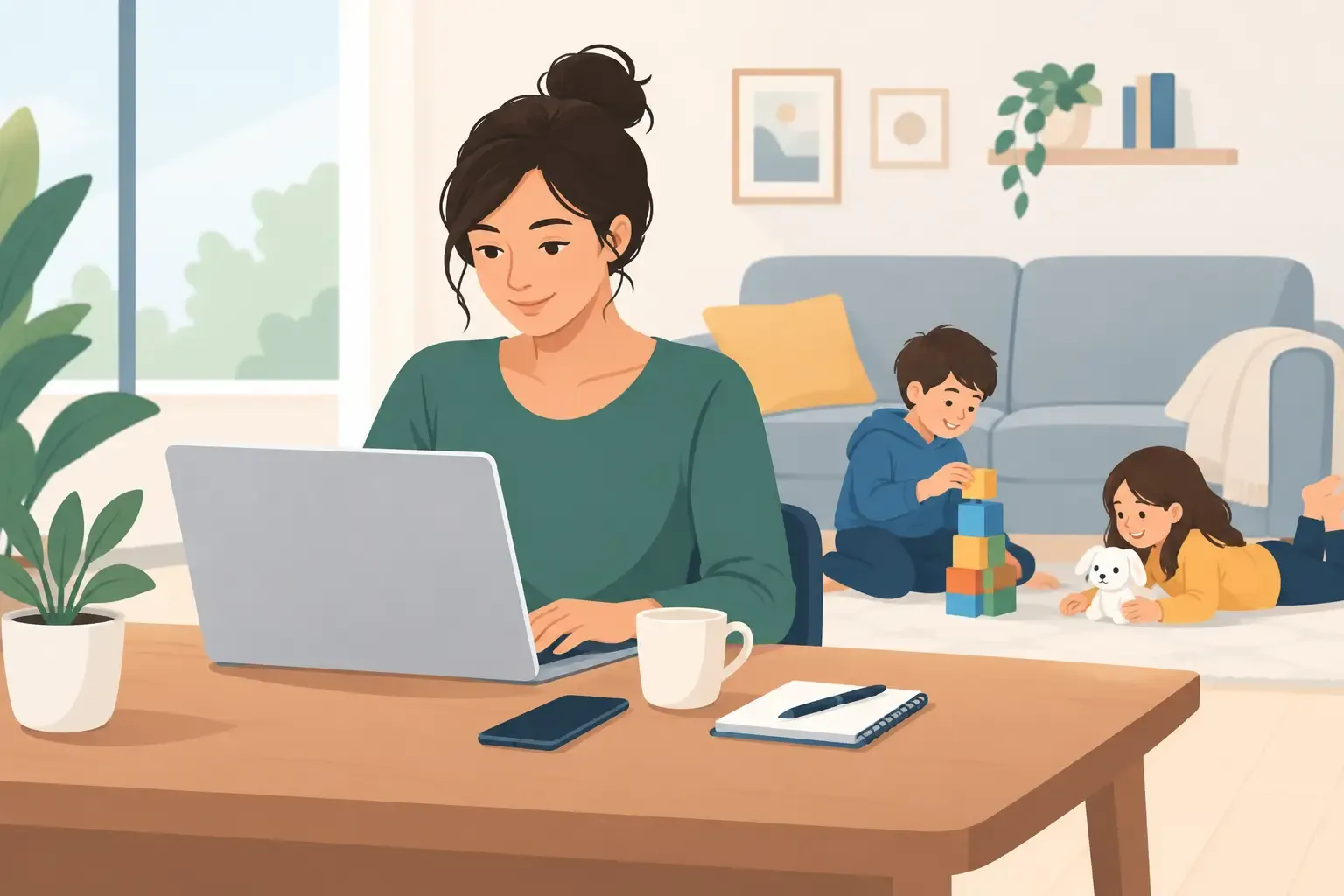
That might look like replying to enquiries after the school run, sharing your experience during nap time, listening to training while dinner is in the oven, or setting aside a focused hour in the evening. The hours may be smaller at first, but they are yours to plan.
This matters because family life is not neatly predictable. Nursery closures happen. Sports days move. Children wake in the night. A role that relies on being in one place between fixed hours can feel especially difficult when you are carrying most of the invisible work at home too.
Flexible work does not remove every pressure, but it can give you more say in how you respond to it.
Why flexibility can matter more than a job title
A familiar job title can feel safe, particularly if you have worked hard to build a career. But if your current role leaves you rushing through mornings, missing moments you cannot get back, or spending most of your wages on childcare and commuting, it is reasonable to ask whether it is still working for your family.
That question is not about being ungrateful. It is about recognising that your needs can change.
Some women want an income stream alongside employment, giving them a little more room each month and a growing sense of security. Others want to create an option that could eventually replace a salary. There is no single right ambition, and there is no need to decide the whole future before you begin.
Starting alongside what you already do can be a gentler route. You can learn, build confidence and see whether the model suits you without putting immediate pressure on it to cover every bill. For many people, that makes the idea of working from home feel far more realistic.
Income flexibility is about options, not hustle
There is a lot of noise online about getting up earlier, working later and turning every spare moment into a side hustle. For a mum already giving her energy to children, a home and perhaps a job, that message can feel exhausting before she has even started.
A sustainable flexible income should not demand that you are available all day, every day. It should allow for seasons. Some weeks you may have time and energy to do more. Other weeks, family life takes the lead. The aim is to build something that can move with you, rather than another commitment that makes you feel as though you are failing.
That does require honest expectations. Any business takes consistency, patience and a willingness to learn. Results will vary depending on your time, effort, skills, market and the way you choose to work. Be cautious of anyone who promises fast money or makes it sound effortless.
The opportunity is not a magic answer. It is the chance to create more options through purposeful work that can be shaped around your life.
The confidence piece people do not talk about enough
Sometimes the biggest barrier is not time. It is the quiet thought of, “Could I actually do this?”
Perhaps you have been out of paid work for a while. Perhaps you loved your previous career but no longer want its hours. Perhaps you have spent years putting everyone else first and cannot remember the last time you did something simply because it mattered to you.
Building a flexible income can be as much about confidence as it is about money. You begin to make decisions for yourself again. You practise talking about something you believe in. You learn new skills, meet people outside your usual circle and prove to yourself that motherhood has not made you less capable.
It may even remind you that you do not need to have all the answers on day one. You just need to be open to learning and willing to take a small first step.
Choosing a flexible income model with care
Not every work-from-home opportunity is the same, and it is wise to take your time before committing. A credible model should be clear about what is involved, how you earn, what support is available and whether there are any costs to consider.
Ask yourself whether the work suits your strengths and your real life. If you enjoy connecting with people, sharing your story and helping others find information that may support them, a relationship-led model may feel natural. If you need complete anonymity or dislike speaking to anyone, a people-focused business may not be the best fit.
It also helps to think beyond the headline of flexibility. Can you work from your phone or laptop when it suits you? Is there training for someone who is new? Is there a community or mentor to turn to when you feel stuck? Can you begin part-time without pretending you have endless hours available?
Steff’s own move from a demanding school leadership role into a more flexible way of earning is a reminder that a change does not have to begin with a dramatic leap. It can begin with curiosity, a conversation and the decision to explore what else might be possible.
Making space without waiting for perfect timing
Most mums do not find a spare three hours sitting untouched in their week. They create small pockets of time, protect them where they can and let the work grow gradually.
That could mean twenty minutes with a cup of tea before the house wakes up, an hour while a toddler is at a club, or a couple of evenings each week. Small actions repeated over time can be more valuable than a grand plan that only works in an imaginary, perfectly organised life.
Try to be realistic about your capacity. If you are starting around employment and children, give yourself permission to begin slowly. You are not behind because your progress looks different from someone with more free time. You are building around your priorities, and that is the whole point.
It is also worth involving the people closest to you where possible. A partner, family member or friend may be able to give you an hour of uninterrupted time now and then. More importantly, letting them know why this matters to you can make it easier to protect that time without guilt.
A different picture of financial security
Financial security is often described as a bigger salary, but for many families it is also about having choices. Choices around childcare, holidays, unexpected costs, reduced hours, and the ability to be present when life changes quickly.
A flexible income may start as help with the food shop, bills or the extras that make family life feel lighter. Over time, it may become a more meaningful contribution or a route towards replacing a traditional income. What it becomes depends on your goals, your circumstances and the work you are able to put in.
The most powerful part is knowing you are not entirely dependent on one employer, one timetable or one version of how life is supposed to look.
You do not need to have your next five years mapped out to explore income flexibility. You only need to ask whether your current way of working leaves room for what matters most - and whether a small, supported step could give you more choice from here.