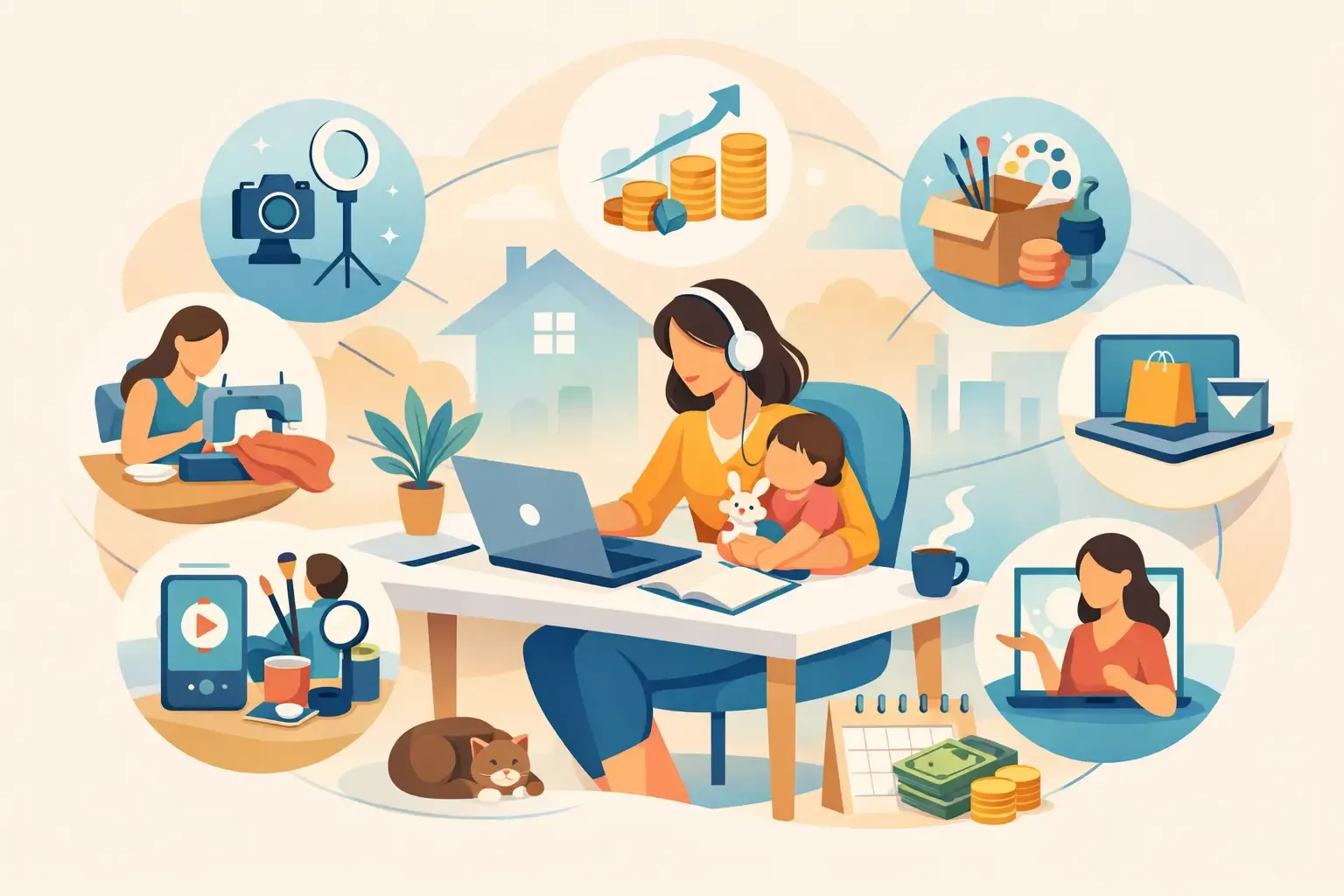
The school run does not leave much room for a job built around someone else’s timetable. That is why so many women search for income ideas for stay at home mums: not because they want to be busy every minute, but because they want more choice. Choice to contribute financially, feel like themselves again, save for a family holiday or simply stop worrying quite so much when an unexpected bill lands.
The right option will look different for every family. Some ideas offer quicker cash but have a ceiling. Others take longer to build, yet can create more flexibility over time. The aim is not to find a magical overnight answer. It is to find something that fits your energy, skills and real life - including nursery pick-ups, poorly children and the fact that you may only have a couple of focused hours in the day.
12 income ideas for stay at home mums
1. Offer freelance admin support
If you are organised, reliable and can keep a diary from turning into chaos, virtual assistant work can be a brilliant starting point. Small business owners often need help with inboxes, appointments, customer messages, spreadsheets or social media scheduling, but may not need a full-time employee.
You can begin with one or two services you feel confident doing. It is flexible, although client deadlines still need to be respected, so it suits mums who can protect regular working slots during the week.
2. Use your teaching or professional experience
Your previous career has not disappeared because you took time out. Former teachers may offer tutoring, lesson resources or educational support. Someone with a background in HR, bookkeeping, marketing, beauty or fitness could offer a service within their experience and qualifications.
This can be particularly rewarding because you are building on skills you already have. Check any insurance, safeguarding, tax or professional requirements before offering paid support, especially where children or regulated advice are involved.
3. Sell a creative service
Designing invitations, making celebration cakes, photography, sewing alterations or creating personalised gifts can become a lovely side income when there is genuine demand. Start small and price properly. Materials, packaging, travel, platform fees and your time all count.
Creative work is often enjoyable, but it can become pressured if every evening is spent making orders. A limited menu, clear turnaround times and a cap on weekly bookings can protect both your profit and your family time.
4. Become a childminder or offer childcare support
For mums who enjoy being around children and have the space at home, registered childminding can provide an income that works around family life. It is not the easy option people sometimes imagine: there are training, registration, safety and inspection considerations.
You may also consider occasional babysitting, school-holiday care or mother’s help work, depending on your circumstances. These routes can be valuable locally, but they are less flexible when your own child is unwell or has an appointment.
5. Pet sitting and dog walking
Pet care can fit naturally around the day for animal lovers. Dog walks after drop-off, home visits for cats or overnight pet sitting may work well if your routine allows it. Trust matters enormously, so clear communication, insurance and a sensible understanding of what you can manage are essential.
This option tends to be more location-dependent than online work. It can be a welcome way to earn while getting outside, but rain, school holidays and travel time need factoring into your rates.
6. Resell items thoughtfully
Selling outgrown children’s clothes, unused household items and unwanted furniture is a quick way to create breathing room in the budget. Once you understand what sells, some people turn reselling into a regular side income by sourcing quality second-hand items to clean, photograph and list.
It is worth separating a clear-out from a business. The first brings one-off money; the second requires stock, storage, customer service and careful records. Begin with what is already in your cupboards before spending money on inventory.
7. Create digital products
Digital products such as planners, party checklists, meal planners, printable learning activities or templates can be created once and sold more than once. They suit someone who enjoys writing, designing or solving a small, specific problem for other busy people.
The attraction is that there is no parcel run or stock piled in the spare room. The trade-off is that it usually takes time to make useful products and build visibility. Think less about producing dozens of items and more about making one genuinely helpful thing for a clear audience.
8. Take on flexible remote employment
Not every flexible income needs to be self-employed. Part-time remote roles in customer support, administration, scheduling, sales support or data work can offer more predictable pay than building a business from scratch.
Read job descriptions carefully. A role advertised as remote may still require fixed hours, meetings or holiday cover that clash with childcare. Ask practical questions before accepting anything: when are the non-negotiable hours, what happens during school holidays, and is the workload realistic in the hours paid for?
9. Share your knowledge through coaching or classes
If people regularly ask you for help with something you know well, there may be a service there. That could be beginner fitness sessions, meal-prep guidance, craft workshops, confidence coaching or small group classes in your community.
Start with the outcome you can responsibly help someone achieve, rather than trying to be everything to everyone. If you are offering health, financial or wellbeing advice, stay within your training and avoid promises you cannot guarantee.
10. Build a content-led income slowly
A social media account, blog, newsletter or podcast can eventually lead to income through partnerships, services or products. For a mum who already enjoys sharing ideas, this can be a way to build a personal brand around real interests rather than a job title.
It is rarely quick money, and it should not be treated as one. Consistency matters more than perfect posts, but your privacy matters too. Decide early what parts of your children’s lives and home you are happy to share, if any.
11. Explore a relationship-led home business
Some women prefer a model where they can learn alongside a mentor, share information with interested people and build through conversations rather than creating a product from scratch. A relationship-led home business can offer a flexible route to develop sales, communication and confidence around family commitments.
As with any business opportunity, take your time. Understand the costs, what work is actually involved, how customers are supported and whether the income structure feels right for you. No opportunity can honestly promise the same result for every person, but the right support and consistent action can make a huge difference.
12. Rent out something you already own
A parking space, unused storage area, driveway or occasionally a room may create income without adding a daily workload. This can be one of the more hands-off ideas, although it depends entirely on where you live and what you have available.
Check your mortgage or tenancy agreement, insurance and any local restrictions first. It is a practical option, not necessarily a long-term replacement for earnings, but it can help fund a specific goal while you build something bigger.
How to choose an income idea that fits family life
Before choosing, be honest about the kind of flexibility you need. There is a difference between working from home and being able to work whenever you like. Client work may be home-based but deadline-led. Childcare may fit your home but tie you to set hours. Building a business may offer more freedom later, while asking for patience at the start.
Choose an idea using three simple filters: how much time you genuinely have, whether you can begin without putting your family under financial pressure, and whether you would still be happy doing it six months from now. A couple of hours during nap time may be enough for some work, but not for a business that expects instant replies all day.
It also helps to decide what success means at this stage. Your first goal might be £200 a month towards food shopping, a savings pot, or proof that you can earn in a way that feels like yours. That is a meaningful starting point. You do not need to replace a full salary before you are allowed to feel proud of yourself.
Give yourself permission to start small
You do not have to have every detail mapped out before you begin. Pick one path, give it a fair trial and notice how it feels alongside the school run and the everyday demands of family life. The best income idea is not always the one that looks most impressive online. It is the one that helps you create more security, more confidence and more space to be there for what matters.