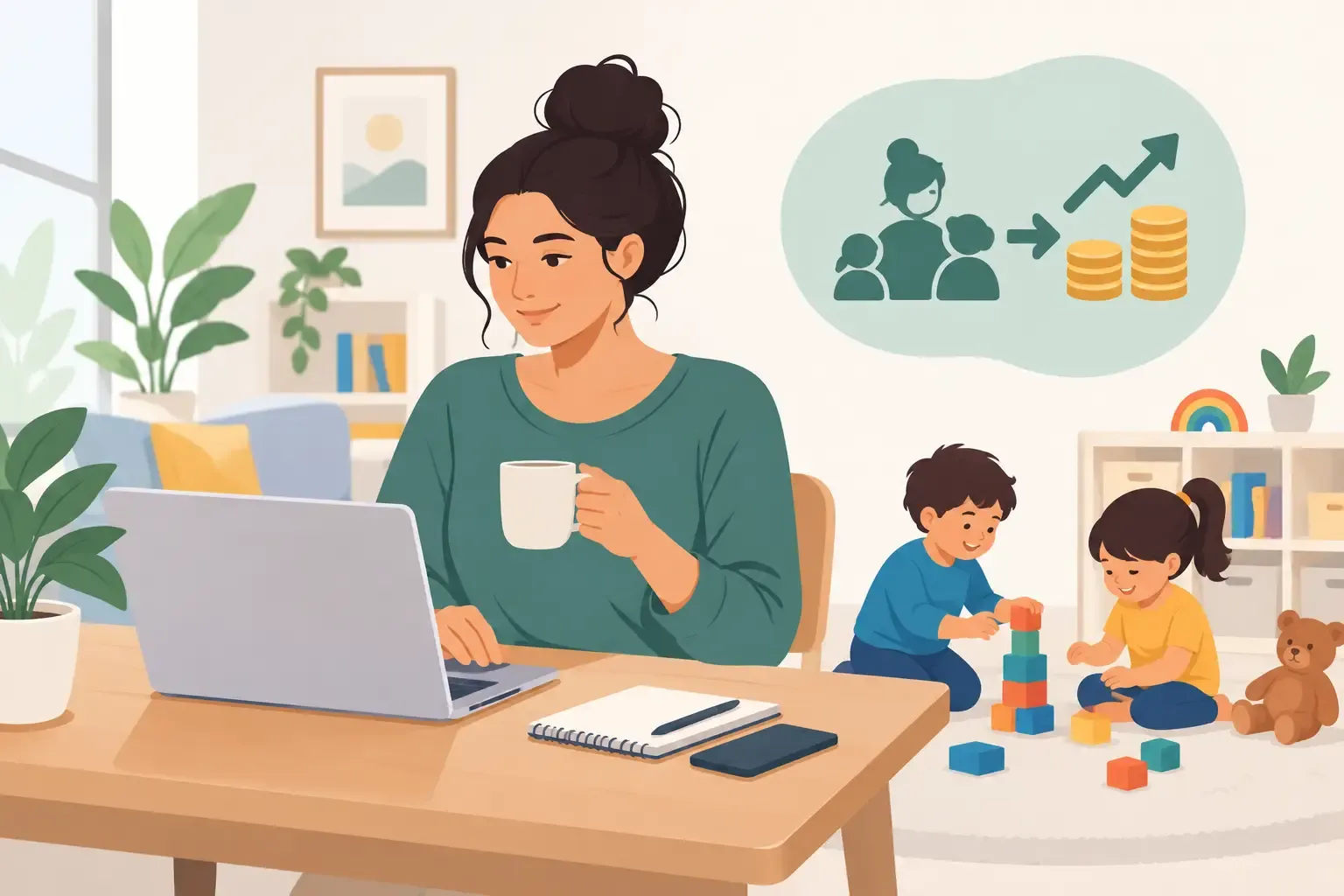
The hardest part of earning as a mum is rarely the desire to work. It is trying to fit work into a life already shaped by nursery drop-offs, school runs, poorly little ones, packed lunches and the endless jobs that do not appear on a payslip. When a parent builds income around childcare, the goal is not to squeeze more into every hour. It is to create a way of earning that works with family life rather than constantly pulling against it.
For many women, that starts with a simple but powerful question: what if earning money did not have to mean missing the moments that matter most?
Why the usual work pattern stops fitting
A traditional job can offer security, routine and a familiar identity. But after children, the structure that once felt manageable can feel completely different. The early commute, fixed shifts, last-minute requests to stay late and the cost of childcare can leave very little room to breathe.
This is not about suggesting that every employed mum should leave her job. For some families, part-time work or a role with a supportive employer is exactly the right answer. But if you find yourself doing the maths every month, dreading another request for holiday cover, or feeling torn every time your child needs you, it is understandable to want more options.
Flexible income is not only about money. It can be about having a choice when there is a school assembly at 2pm, being present during the holidays, or knowing a nursery closure will not cause panic. It can also be about finding a part of yourself beyond the daily care list.
How a parent builds income around childcare in real life
The picture of working from home can be misleading. It is not usually someone answering emails peacefully for eight uninterrupted hours while a toddler plays quietly beside them. Real family life is noisier than that.
A more realistic approach is to build in the pockets of time you already have. That might be an hour after bedtime, 20 minutes at nap time, a couple of focused sessions on the days your child is at nursery, or time at the weekend agreed with your partner. Small, consistent actions can be far more sustainable than trying to work all day while also caring for children.
The key is choosing a model that does not demand you are permanently available. A home-based business built around sharing information, creating genuine connections and following up with people who have asked to know more can be shaped around your capacity. You can begin alongside employment or childcare, learn as you go, and decide later whether you want to grow it further.
That is very different from chasing every trend, relying on viral content or taking on work with impossible deadlines. A flexible business still requires commitment, but it gives you more say over when that commitment happens.
Start with your non-negotiables
Before choosing how you will earn, get honest about what you need your week to look like. If you need to be free for the school run, protect that time. If evenings are already exhausting, do not build a plan that relies on three hours of work every night.
Your non-negotiables may include nursery days, family meals, caring responsibilities, your existing job or simply one evening a week where you do nothing at all. Protecting those boundaries is not a lack of ambition. It is how you build something you can keep going with.
Then look at the time that is genuinely available. Even five to seven focused hours a week can be a starting point. What matters is being realistic, rather than creating a perfect timetable that falls apart the first time someone gets chickenpox.
Build skills before chasing speed
When money feels tight, it is tempting to want instant results. But sustainable income usually comes from learning useful skills and repeating simple actions over time. Confidence with social media, telling your story honestly, starting conversations and handling enquiries kindly are all skills that can grow with practice.
You do not need to be the loudest person online or have a huge following. In fact, many women connect most strongly with someone who speaks openly about real life: returning to work, struggling with childcare costs, wanting more independence, or simply wishing they could be more present at home.
Your story does not need to be dramatic to matter. It only needs to be true. People are far more likely to trust an honest account of why you are exploring a different path than polished promises about easy money.
Choose flexibility, not false promises
There are genuine opportunities to build an income from home, but flexibility should never be confused with effort-free income. Any credible business will ask you to learn, show up consistently and communicate with people. There will be days when the children are unsettled, your confidence wobbles or the washing wins.
That is why it helps to look beyond bold income claims. Ask whether the opportunity can be started part-time, whether you receive clear information before making a decision, what support is available, and whether the work fits your values. You should understand what you are being asked to do, any costs involved and the fact that results vary from person to person.
A good opportunity should leave you feeling informed, not pressured. It should make room for questions. And it should allow you to take the next step at your own pace.
For some mums, the right first step will be a flexible role, freelancing or returning to work for a few days a week. For others, building a relationship-led home business feels like a better fit. There is no one perfect route, only the route that supports your family, your energy and your longer-term goals.
Make the business fit around the children, not the other way round
One of the biggest mindset shifts is letting go of the idea that you need to copy somebody else’s routine. The mum with older children has a different day from the mum with a baby. Someone with family nearby has different support from someone doing most of it alone. Your plan should reflect your real circumstances.
Try creating a gentle weekly rhythm rather than a rigid daily schedule. Perhaps you use one session to share content or speak about your experience, another to reply to messages, and another to learn or plan. When childcare is covered, use that time for the tasks that need concentration. Keep lighter tasks for the odd pockets of time.
It also helps to communicate at home. If you have a partner, explain why this matters to you and agree when you will have protected time to work. Building income around childcare should not mean working invisibly until midnight every night. The aim is more freedom, not another source of guilt.
Let progress look small at first
At the beginning, progress may be quiet. You might post something that feels scary, have one conversation with someone interested, learn a new skill or make a plan for the week ahead. These things count.
Confidence rarely arrives before action. It tends to appear after you have taken a few imperfect steps and realised you can do more than you thought. As your skills grow, so can your belief in what is possible for you and your family.
There may be weeks when life takes over. A child is ill, the holidays arrive, or you simply need to pause. That does not mean you have failed or gone back to square one. A flexible income model should have room for real life, because real life is the reason you wanted flexibility in the first place.
Create options for the future
Building an income around childcare is not about trying to do everything alone. It is about giving yourself choices. Choices about whether you return to a rigid role, reduce your hours, contribute more to the household, save for a holiday, or create breathing space when life changes.
For many women, the financial side is only part of the transformation. There is something deeply valuable about remembering that you can learn, contribute, grow and make decisions for yourself, while still being there for your children.
You do not need to have every answer before you begin. You only need to be willing to explore what could fit your life now, not the life you had before children. Start with one honest conversation, one small pocket of time and one step that feels possible. The future does not have to be built in a rush to become meaningful.